White Freesia Watercolor: A Designer's Review
As a designer who has spent years curating assets for both personal craft projects and commercial embroidery lines, I approach every new file with a critical eye. The market is flooded with generic patterns, but occasionally, a design arrives that feels like it was made specifically for the nuanced needs of a small business owner or an Etsy seller looking to elevate their brand. White Freesia Watercolor falls into that rare category. It belongs to the Illustrations category, yet its application in the physical world of thread and fabric requires a thoughtful strategy to truly shine.
The Mood and Visual Personality
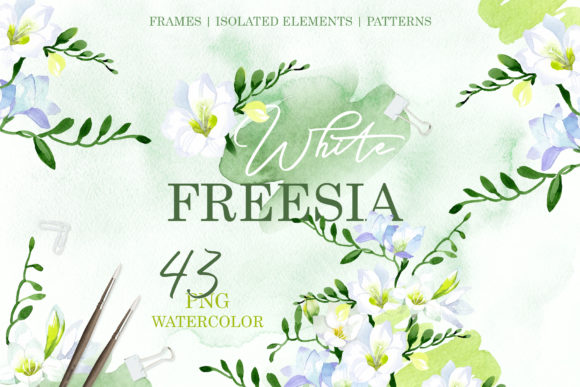
At first glance, the White Freesia Watercolor design exudes a soft, ethereal quality that immediately sets a specific tone. Unlike bold, graphic florals that demand attention through high contrast, this piece relies on delicate gradients and fluid shapes. The watercolor aesthetic suggests a handmade, artistic touch, making it perfect for brands that want to communicate warmth, gentleness, and sophistication. When I visualize this as a finished product, I don't see a standard logo; I see a statement of style suitable for boutique branding or high-end personalized gifts.
The layout is balanced, avoiding the clutter often found in complex floral arrangements. This openness is crucial for machine embroidery, where too many tiny details can get lost in the stitch count. Instead, the design focuses on the organic flow of the freesia petals, allowing the needlework to mimic the brushstrokes of a painting. For a creative entrepreneur, this visual personality translates directly into customer trust. Shoppers are increasingly drawn to items that feel unique and artisanal rather than mass-produced.
Real-World Application: From Screen to Stitch
Let’s talk about how this actually performs when you move from the digital preview to a real project. Imagine you are preparing a custom embroidered tote bag for a spring collection. You load the White Freesia Watercolor file onto your hoop, perhaps on a sturdy canvas background. The result is striking. The soft edges of the watercolor effect, if rendered correctly with varied fill stitches, create a sense of depth that flat embroidery often lacks.
This design is equally at home on a sweatshirt. Picture a light gray heather crewneck with the white freesia placed subtly on the chest pocket area. The contrast isn't jarring; instead, it feels integrated into the garment. For baby items, such as a onesie or a nursery pillow cover, the gentle nature of the flower makes it an ideal choice. Parents love designs that feel safe and calming for their children, and this illustration delivers exactly that without being overly childish.
However, the versatility extends beyond apparel. Consider a kitchen towel or an apron for a local craft fair. The botanical theme fits seamlessly into home decor trends. If you are an Etsy seller creating holiday gifts, this design could be paired with simple monogramming to create a luxurious wedding gift or a housewarming present. The key is understanding that while the design is beautiful, its success depends heavily on the execution of the machine embroidery design process.
Navigating Fabric and Hoop Challenges
While I am enthusiastic about the potential of White Freesia Watercolor, practical experience dictates caution in certain scenarios. The delicate nature of watercolor effects means that not all fabrics will serve the design well. On textured fabrics like heavy wool or thick denim, the fine details might get swallowed by the weave. Similarly, on stretchy fabrics like jersey knit, the tension required to hold the shape of the flower could cause puckering if the wrong stabilizer is used.
Dark fabrics present another challenge. Since the design features white and likely pastel tones, stitching it on black or navy material requires careful consideration of thread colors and underlay. Without a proper underlay layer, the white satin stitch or fill stitch may not pop, leading to a muddy appearance. Always test the design on scrap fabric first. Check how the thread interacts with the background color before committing to a client order or a batch of inventory.
Hoop size is also a critical factor. While the design looks great conceptually, shrinking it down to fit a 4x4 inch hoop might compromise the integrity of the watercolor effect. The subtle gradients rely on enough space to breathe. If you attempt to use this on a cap or a curved surface, the distortion could ruin the organic flow of the petals. It is best suited for flat surfaces where the stitch density can remain consistent.
Maximizing Value for Your Craft Business
For small shop owners and digital product sellers, the value of an asset like White Freesia Watercolor lies in its ability to elevate the perceived value of the finished product. A well-executed embroidery project using this illustration signals professionalism. It tells the buyer that you care about aesthetics and quality. In a crowded marketplace, this level of detail helps differentiate your handmade products from competitors offering generic clip art.
When reviewing the design for commercial use, consider how it affects your brand consistency. Does this soft, floral look align with your existing line? If your brand is edgy and industrial, this might clash. But if you specialize in boho-chic, bridal, or nursery items, it is a goldmine. Use printable mockups to visualize the design on various products before investing in materials. Compare light and dark fabric backgrounds to ensure the design remains legible and attractive across your catalog.
Practical Notes for the Embroidery Designer
Before you finalize any project, there are a few non-negotiable steps to take. First, confirm the licensing terms. As a digital product seller or someone selling finished goods, you must ensure you have the right to use the embroidery file commercially. Second, inspect the small details. Zoom in on the file to check for any stray threads or overlapping paths that could cause issues during stitching.
Always review the stitch density. High density can make the fabric stiff, which is undesirable for clothing. If the file allows, adjust the settings to ensure the final piece remains soft and wearable. Test it in black and white mockups to assess the silhouette, as color can sometimes mask structural weaknesses in the design. Finally, remember that while this is an Illustrations type design, it functions as a powerful tool for creating custom apparel, embroidered patches, and personalized gifts.
In conclusion, White Freesia Watercolor is more than just a pretty picture; it is a strategic asset for the modern maker. With the right fabric choices, proper stabilization, and a keen eye for placement, it can transform a simple garment into a cherished keepsake. Whether you are decorating a sweatshirt for a friend or launching a new line of boutique merchandise, this design offers the elegance and flexibility needed to succeed in today's craft economy.